managing stiltgrass and different invasives, with angela sirois-pitel
You can view the original post here
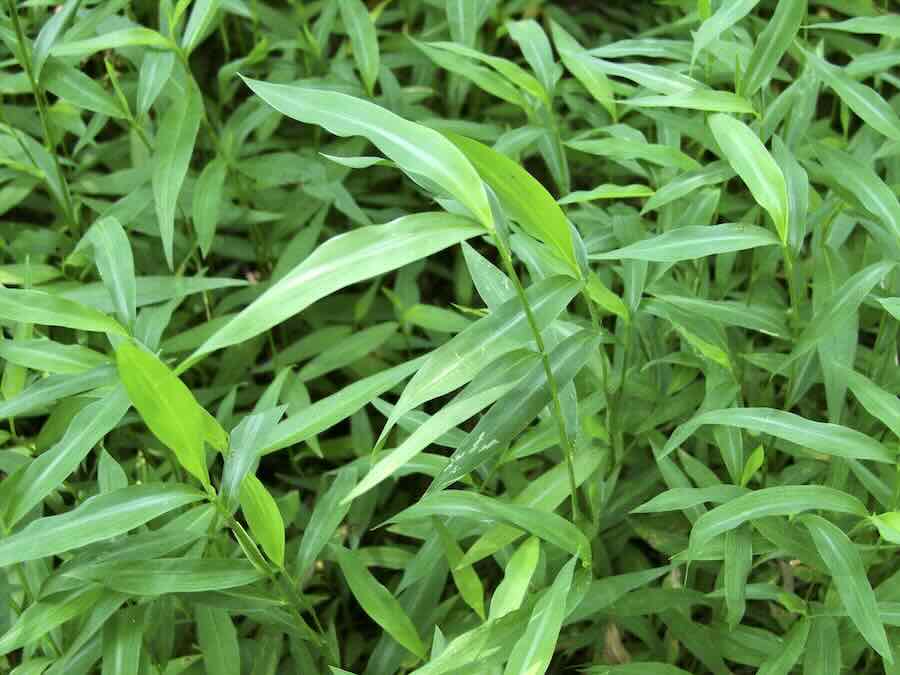
From barberries and multiflora rose bushes to the nasty annual grass known as stiltgrass (above), Angela and her group have confronted all of them.
Angela is a conservation biologist who serves as stewardship supervisor for The Nature Conservancy within the Southern Berkshires of Massachusetts. Her function there ranges from tackling invasive species, to serving to save endangered bathroom turtles.
She talked about how she prioritizes what to work on, and the way she seems to be for clues to methods to handle these undesirable vegetation—clues of their biology, maybe. We mentioned the laborious alternative whether or not to make use of chemical controls, and when it's made and the way, and we talked about tackling stiltgrass, too, and even stunning garden-escapees like Primula japonica on conserved land.
Learn alongside as you hearken to the July 11, 2022 version of my public-radio present and podcast utilizing the participant beneath. You possibly can subscribe to all future editions on Apple Podcasts (iTunes) or Spotify or Stitcher (and browse my archive of podcasts right here). (Photograph of Angela Sirois-Pitel, beneath, from The Nature Conservancy. Element of stiltgrass or Microstegium vimineum, above; photograph by Dr. S. Luke Flory.)
![]()
![]() stiltgrass and different invasives, with angela sirois-pitel
stiltgrass and different invasives, with angela sirois-pitel
Margaret Roach: Hello, Angela. We lately collaborated on a “New York Times” garden column about stiltgrass. Oh my. And we’ll get to that. However first I simply wished somewhat context to know somewhat bit extra concerning the work you do, as a result of it’s not simply vegetation. It’s habitats. It’s like I simply was mentioning, bog turtles, as an illustration, is one factor, so inform us somewhat bit concerning the breadth of the work.
Angela Sirois-Pitel: Yeah. So, the work concerned in stewarding conservation lands or preserves could be very numerous. I believe that’s what I like most concerning the job. Actually, my ardour for conservation and wildlife is basically what introduced me, properly, to remain within the Berkshires, that’s the place I grew up. However I actually get pleasure from simply the variety of issues.
I obtained into a few of this work with my pleasure for turtle conservation and bog turtle conservation particularly. However I realized in a short time that while you wish to work with wildlife, a lot is concerning the habitat and the vegetation and the water and the larger methods. They’re enjoyable, nice, cute little creatures to review and shield, however it actually comes all the way down to the vegetation a lot. So, I shortly realized how a lot I had to enhance my botanical abilities and study plenty of native species and invasive species and perceive how all the vegetation work collectively to assist the wildlife that we’re so hooked up to.
Margaret: Sure. So, phrases like “weed” versus “invasive.” Inform us somewhat bit about, as an individual concerned in this sort of conservation work, how do you regard these phrases? Once you establish an invasive, what are you enthusiastic about? As a result of plenty of gardeners, we are saying “weeds,” however then a few of them are technically additionally considered invasive vegetation on a bigger scale and so forth.
Angela: Yeah. So, I'd say invasive plant administration is like weeding on an ecological scale [laughter]. A a lot larger backyard. [Above, the Drury Preserve in Sheffield, MA; photo by The Nature Conservancy.]
So, I believe that’s the way in which I usually attempt to body it and that invasive vegetation are vegetation that generally they are often native, and infrequently those that we’re working with are non-native, that means they don’t originate within the Northeast, the place we’re based mostly or wherever you occur to be managing land. So, invasive is that these are actually super-competitor vegetation. They've plenty of distinctive reproductive methods. They’re extremely aggressive. They’re very aggressive and vigorous.
So, they're truly fairly spectacular vegetation, however after they get a foothold the place you don’t actually need them, that’s after they grow to be invasive. They usually actually push out, usually pushing out native vegetation or simply altering the construction. So, the place you perhaps had an open understory underneath a forest, now you will have a dense shrub layer. So, these form of modifications that you just see much like in a backyard when a plant rising someplace that you just don’t need it, since you need one thing else to be rising there.
Margaret: And this invader can't solely take up territory, however it might stop the following era of the specified vegetation from efficiently going by way of their seedling and progress course of. I imply, there’s so many repercussions. Then, as you stated on the very starting, the creatures, the animals from bugs on up, who depend upon that meals internet, that the vegetation are tremendous necessary in it, uh-oh, that’s all interrupted.
Angela: Precisely. The research of invasive vegetation, the invasive-plant ecology subject has actually grown tremendously within the final 10 to fifteen years that I’ve been working in conservation. It’s simply superb what they will perceive for the impacts of those vegetation now, and all the things from altering the soil and even the synergies between a number of the invasive vegetation collectively or the invasive bugs, just like the leaping worm and its connectedness to a number of the different invasive vegetation. Or the barberries’ connectedness to elevated tick populations, and the way completely different vegetation can change fireplace regimes. They actually have these cascading impacts all through the system.
Margaret: Sure. So, is step one then… I imply, I’m fascinated by “weeds,” by the facility of them, which you simply form of referred to, and their methods. So, my first query after I encounter a plant I don’t know that appears to be behaving in a weedy approach, is I wish to know its biology, its life historical past, the way it operates and what’s its particular superpower. You realize what I imply?
Like subject bindweed has roots that go down 20 ft or extra, and the much-loathed garlic mustard, with so many ways: a profuse quantity of seeds in addition to this allelopathic chemical warfare it conducts within the soil. Oh my goodness. They've so many powers. So, do you, earlier than you begin tackling one thing, attending to understand it, is that what you do? Do you do this analysis?
Angela: Yeah, completely. So, after I first encountered stiltgrass, it was heaps and plenty of analysis. O.Ok., what is that this plant? Is it an annual? Is it a perennial? What sort of habitat is it going to thrive in? What are its patterns for growth? The place do I would like to actually focus in on to be anticipating it to point out up or for it to unfold into?
So, that’s all the time step one, particularly with a few of these new invasives that aren’t a part of our regular repertoire that we’ve been managing for the final couple many years. However identical to each plant has… Lots of these invasive vegetation do have a superpower. They often have some weak point, there’s one thing… So, that’s the place there’s a really enormous intersection between practitioners like myself and the analysis subject working collectively collaboratively to grasp how do we discover the weak factors for these species? And whether or not that’s a time-of-year management, a particular management technique, a biocontrol agent, any of these is a continuing, ongoing battle.
Margaret: Proper. So, earlier than we get to stiltgrass, I reside within the adjoining space to the place you're employed. The Southern Berkshires of Massachusetts is the place the northwest little bit of Connecticut and a part of New York State come collectively, and I’m on the New York aspect. So, I do know the realm that you just’re working in, and the sorts of invasives that I see alongside the roadsides right here and expertise in my very own backyard. Issues, as I stated within the introduction, as large as barberry shrubs and multiflora rose and privet and these woody invaders. In these giant properties that you just’re managing, you should have plenty of points with these large guys, sure?
Angela: Sure, completely. I believe in our particular area, we have now two elements which have actually contributed to the explosion of invasives that we have now right here. One is our agricultural historical past and present expertise with most of our forests, which have been pastures 70 to 100 years in the past. Our forests have been cleared for the coal trade, so these are youthful forests. So, plenty of these forests are younger, they usually’ve had more moderen disturbance. So, all of these disturbance occasions have allowed the invasives to positively get extra of a foothold, particularly across the edges. [Above, habitat management at one Berkshires project; photo by The Nature Conservancy.]
Then additionally the Berkshire Mountains have plenty of calcium deposits within the geology right here. So, the wealthy soils that we have now surrounding the Berkshire-Taconic vary additionally make it actually nutrient-rich for invasives, in addition to plenty of the uncommon native vegetation, too. That’s why they’re discovered right here as properly.
So, yeah, these two elements [laughter], they work collectively to create plenty of invasives.
So, after I first began, it was fairly daunting to come back into managing so many hundreds of acres of land that simply have been already well-invaded. It actually was miserable at first. However I believe the way in which that I’ve managed it, and I educate my seasonals and interns and all of the those that come and work for us over the summertimes, is rather like: We've got to be actually centered and prioritized and strategic about the place we do our invasive-control work, as a result of we are able to’t do it in every single place.
They're right here, these barberry and multiflora rose, bittersweet. They’re right here to remain. Eradication is just not an possibility for these species. It’s extra about, the place can we not have them take over?
These are going to be in our areas which are most susceptible and have our most uncommon species, that’s the place we focus plenty of our work.
Then, on the brand new invaders, my colleague likes to say like, “What if you found the firstever barberry plant or bittersweet vine, wouldn’t you want to make sure you didn’t let it get a foothold in your yard?”
Margaret: Proper. You instructed me, after we spoke for the “New York Times” piece, as an illustration, I imply, a plant I hadn’t regarded as a possible invasive Primula japonica, I believe it was, one of many primulas that plenty of gardeners like, and also you’re encountering one thing, “Oh, it’s so pretty.” However guess what? In the precise spot, it’s uncontrolled. So inform us about one thing like that, because-
Angela: Yeah, that was a brand new one for us that my colleague, Rene Wendell, he began seeing it in every single place. “What is this flower?” So, it’s like all the time, we’re fairly used to the stuff we see. So, when he, rapidly, begins seeing one thing somewhat bit extra frequent than we’re used to, we actually jumped on it. And it possible did escape from plenty of gardens, as a result of it's this lovely flowering plant that does properly in moist areas, which is now invading plenty of these uncommon open wetlands that we have now plenty of uncommon sedges, or rushes, or plenty of these different delicate vegetation that simply wouldn’t have the ability to compete.
Margaret: To face as much as it. Yeah.
Angela: Precisely. So, it’s so aggressive. I imply, we used to… Once I first began, we did plenty of battling in opposition to purple loosestrife, and I’ve been so grateful of the success of that biocontrol agent, as a result of now purple loosestrife is simply not likely on my radar as a species I've to fret about anymore.
Margaret: So, by saying that you just imply a biologic management, one thing that analysis scientists have came upon about that’s a pure enemy of the plant, is that-
Angela: Right. Yeah. So, there’s a couple species of beetle that they researched extensively. We've got actually strict protocols now for researching and releasing any bugs that mainly don’t belong right here, to guarantee that they're actually extremely particular to the invasive plant that we wish to management they usually’re not going to leap species. As a result of there are some native loosestrife species. [Above, a wetland invaded with purple loosestrife; Wikimedia Commons image.]
So, this had been examined actually aggressively for a few years earlier than it’s been launched. I'd say it’s in all probability perhaps 10 to fifteen years in the past that I first began to see it present up within the Berkshires, they usually’re these little beetles they usually simply do a incredible job. They munch on that purple loosestrife. We nonetheless have it, however we don’t get these dense, thick stands of it anymore. I bear in mind seeing calendars with fields of purple loosestrife [laughter] and now you don’t see these anymore.
Margaret: No, no. That’s talking of vegetation which have a weedy, a technique for being profitable, I’ve learn that a big purple loosestrife plant can produce 2.7 million seeds per season. And to make issues worse, they float, to allow them to float downstream and invade a brand new space fairly simply, which truly, our important subject, that we wish to get to now, stiltgrass, I believe its seeds can float, too. I consider that’s potential, they will transfer in water [laughter].
Angela: Sure. I recall that could be a appropriate reality. I imply, we frequently see it transferring alongside drainage ditches or stream corridors. It positively strikes properly in these watery-type environments.
Margaret: So, stiltgrass, do we are saying Microstegium, is that appropriate?
Angela: Yeah. Microstegium.
Margaret: Botanical Latin is such a humorous one, all of us pronounce it otherwise.
Angela: I do know. That’s why I attempt to steer clear [laughter], as a result of I do know I’m simply going to botch the names.
Margaret: So, you’ve been tackling it for greater than 10 years the place you're, however it’s been on this nation for a century or so. It’s from numerous elements of Asia, Japan, China, India, Korea, Malaysia. It in all probability got here in perhaps as packing materials in crates of porcelain that was imported a century in the past.
However now it’s as far-ranging, as wide-ranging because the Florida Panhandle up into new England, out to Michigan, as far West as Missouri. It’s gained plenty of floor, and it’s an annual grass, a warm-season annual grass. So, inform us somewhat about while you met it and what you have been like, oh my goodness [laughter], and what you tried to do.
Angela: Yeah. I had simply come again to working for The Nature Conservancy from somewhat stint in grad faculty. I used to be up on at some preserves that we personal in Mount Washington, Massachusetts, and noticed this grass alongside the roadside that I used to be like, “Oh, I don’t really recognize that one.”
And I occurred to be out with a botanist who was doing a little work they usually’re like, “Oh, that’s stiltgrass.” And I used to be like, “Tell me about this.” Like, “Oh, it’s an invasive, it’s new, but it’s been here for a couple years.” And I used to be like, “Wait, what?” I used to be like, “Well, how do we have a new invasives and I didn’t know about it?”
That was my first shock, and my first realization that I simply wanted to maintain me and our group far more apprised to what’s arising the pipeline from Connecticut and New York that's more likely to present up in our neighborhood subsequent.
Then it was fairly shortly that 12 months, after I first came upon about it, I began doing a little analysis. After which I had my seasonals, placing collectively some data. Then we simply began to do an intensive mapping, strolling the roads on the city of Mount Washington to see how dangerous it was, and the place it was, and inventorying our properties simply to first get that first sense of how dangerous is it. I used to be fairly upset to learn the way dangerous it was already, this was 2010-ish, that it was already fairly widespread alongside the roadsides. [Above, a half-weed whacked stretch of stiltgrass along a Berkshires roadside; Angela Sirois-Pitel photo.]
So then, it was attempting to get our understanding of management up as fast as potential. We began reducing, doing simply the weed whacking alongside the roadsides. And plenty of attempting to… I used to be simply attempting to achieve out to all of the companions I may about like, “Hey, did you know about this new plant, stiltgrass? We have it here and you should be on the lookout for it.”
It actually turned one thing I used to be very centered and pushed on for a pair years, and was capable of manage a small symposium workshop, I believe in 2012, to get a bunch of practitioners collectively to only educate individuals about this, in addition to enthusiastic about a number of the newer vegetation that individuals have been coping with.
Margaret: So, this, as I stated, is a warm-season annual, so it’s an annual that doesn’t come up super-early, it waits a short time to germinate for extra favorable circumstances that swimsuit it. So, usually talking, with an annual weed–I've many annual weeds which have are available in on backyard vegetation or no matter from the nursery, Galinsoga, as an illustration. So, annual weed, O.Ok., Margaret will say to herself, “I don’t want that to flower and set seed. So, I’m going to try to interrupt that part of the process.” As a result of annuals sowing seed means extra of them subsequent 12 months, extra of that annual subsequent 12 months [laughter].
Nevertheless it didn’t show to be fairly that straightforward with the stiltgrass to only weed whack it and forestall it from setting seed. That didn’t appear to do the trick. Did it?
Angela: No. The place we have now been doing it for years, we noticed success in that it wasn’t taking off. It wasn’t aggressively spreading outdoors of our focal areas. However we weren’t actually seeing a discount within the effort that we want to see, that we see with different invasive-control tasks, the place you may hit it actually laborious 12 months one and 12 months two, and the following couple years, it’s simply touch-up, somewhat bit of labor right here and there, as a substitute of per week of time, you’re simply spending a day or half a day.
We simply weren’t seeing these outcomes that we had hoped for with stiltgrass. So, I believe, like how your article talked about is because the science developed, understanding why that reducing alone wasn’t working, that they will have these completely different choices for setting seed they usually’re decrease on the stem, or self-pollination, this stuff that our reducing simply couldn’t truly deal with.
Margaret: Proper. Proper. So, some vegetation, in all probability plenty of vegetation, have a backup technique for fulfillment if there’s a hearth or if no matter occurs in nature (these days it’s if we mow it down), there’s a backup technique. And this one has these semi-hidden self-fertilizing, self-pollinating flowers approach down beneath. It has what’s known as a blended mating system, which you and I realized about from the scientists, we collaborated on that “New York Times” story.
So, it’s like, that’s the backup. So, even when we mow it down, there’s a few of these hidden seeds down beneath, they usually’re not getting knocked down [laughter]. So, that could be one of many issues that makes it succeed. You have been mowing when? You have been determining your timing for when?
Angela: Typically, we have been mowing in August, we might attempt to hit it late August to early September, as a result of we felt that that was tall sufficient the place we may actually see it and get an excellent reducing all the way down to the bottom as a lot as potential. If we have been reducing it too early, it’s very easy to overlook into July. The vegetation are simply so small, and we may even return and be like, “Oh, here’s a plant here. There’s a plant there.” That we simply couldn’t see, as a result of the roadsides are often full of fairly a variety.
Margaret: Positive. So, you stated you have been conserving it the place it was, however you weren’t decreasing it actually considerably.
So, I believe individuals are actually stunned to study that generally conservation organizations, type of within the title of the larger good, are making this tough determination to show to chemical management, which none of us needs to do. However generally while you see treasured habitat, corresponding to all these acres that you just steward in your function or different individuals at The Nature Conservancy do, generally that’s what appears to be the higher alternative. Sure?
Are you able to discuss somewhat bit about that, as a result of I believe that’s what you’ve achieved with a number of the worst conditions with the stiltgrass. [Below, faded stiltgrass late in the season, covering a garden.; Ken Druse photo.]
Angela: Yeah, completely. So, I imply, sure, we all the time wish to select the choice to manage a plant that’s going to have the least quantity of injury and probably the most quantity of profit. So, we have now a collection of various instruments we’ll use relying on the plant, the species, and the place the goal group is: Are we on a roadside or are we in a delicate wetland or in a forest?
So, we have now to look, we have a look at every all of these elements after we determine what’s going to be our greatest possibility to start out with. On this case, stiltgrass, as a result of it was an annual grass, and since we all know that there’s lots of people preferring to not use chemical compounds, that we wished to start out with that as an possibility.
So, we tried that out for a very long time, and we in all probability may have switched sooner, however we realized we weren’t getting the outcomes. So, that's after we determined to speak with a few of our colleagues within the subject and different professionals about what if we did use a chemical software, what can be the best choice for us obtainable based mostly on utilizing the least quantity of chemical and having probably the most direct impacts and the least quantity of unfavorable impacts, all of that? So, that's usually how we’ll go.
You possibly can learn labels and you'll discuss to plenty of completely different specialists to determine what your greatest strategy goes to be. It’s all the time such a studying expertise with these management methods, since you begin off utilizing the least quantity potential. And the way good is your management effort going to be with an oz.?
So, I imply, after we’re taking a look at our chemical purposes, we’re utilizing extraordinarily small quantities, we’re speaking a couple of couple ounces in a several-gallon tank. So, it’s very diluted and watered-down. They’re chemical compounds that we’re very snug and really protected working with and have been efficiently for years. I benefit from seeing how fantastic these management methods can work in delicate habitats, the place we have now been utilizing them to do goal purposes for many years, they usually’re thriving with all of those uncommon species.
Margaret: Which are coming again. Proper.
Angela: Precisely. Sure. So, there’s not a useless zone.
Margaret: No, no, no. Proper. So, we have now only a couple minutes left. You made such an excellent level in the “New York Times” story, which was you don’t simply go to the shop and purchase the acquainted brand-name factor on the large field retailer and go on a mad spraying marketing campaign at your house.
You rent a advisor who has an ecological orientation, who is aware of all these things, and have them consider your scenario and aid you establish the precise product. I believe that’s super-important, as a result of it’s not one dimension matches all, and individuals are random spraying when it’s not required, they usually’re utilizing the improper issues and so forth within the improper habitats.
However I simply wish to go away somewhat time to say a number of the excellent news [laughter], since you’re not all the time preventing invasives, that individuals can come and go to these unimaginable properties. I used to be simply taking a look at even the place we're, within the Connecticut-New York-Massachusetts space, there’s so many unimaginable preserves and so forth which are managed by The Nature Conservancy. So, is visitorship, is that plenty of the mission, too?
Angela: Yeah. So, I imply, The Nature Conservancy is considerably of a decentralized group, in that every state has its personal chapter and form of has some flexibility to determine and focus what they wish to give attention to. So, some states do have extra of a give attention to recreation and trails and customer experiences than others do. So, you will have a mixture of experiences. In Western Massachusetts, we solely have one or two trails that we actually focus our time on, as a result of we spend plenty of our time managing uncommon species habitat. However yeah, individuals can go to nature.org and search for places we protect.
So, I believe that the connectedness between nature and folks could be very a lot a part of the mission of The Nature Conservancy, however our roots are positively within the science and defending species and locations and habitat. We haven’t misplaced that. That’s one of many nice issues about The Nature Conservancy, which is attempting to deliver all of these parts collectively in conservation.
There’s so many sources for individuals on the web in the event that they wish to study extra about invasives or in the event that they… Checking with their extension applications for his or her main universities, they often have plenty of nice sources. Lots of the states have lists of invasive vegetation.
Margaret: So, we’re out of time, however there’s a lot extra to speak about. In fact, I’m over right here proper close to me as my first expertise with stiltgrass. And I’m beginning with what you suggested me in our “New York Times” story, too. I’m beginning with the hand-pulling, as a result of it’s a small spot and see what occurs. Then seeking to perhaps mow or weed whack it late in the summertime. So, we’ll see. However I respect your making time right this moment. Thanks a lot.
Angela: Sure. Thanks. I want you the most effective of luck with that stiltgrass. You possibly can succeed if you happen to stick with it.
Margaret: It’s small. So, I’m alerted to it, due to you.
extra assist with weeds and invasives
favor the podcast model of the present?
You can view the original post here Show Original: https://librareview.com/managing-stiltgrass-and-different-invasives-with-angela-sirois-pitel/


Comments
Post a Comment