Proprioception: Past The 5 Senses

You can view the original post here
How Understanding Proprioception Can Cut back Ache, Enhance Efficiency, and Preserve You More healthy Longer
Aristotle might have recognized the 5 senses of sight, odor, style, contact, and listening to in his treatise, On The Soul, in 350 BC, however science has come a great distance since then. It’s not simply the fab 5 anymore. Your physique additionally has its personal sensory World Positioning System, one thing Nobel Prize-winning neurophysiologist Charles Scott Sherrington labeled proprioception in 1906. It’s derived from the Latin phrases proprius— “one’s own,” and percepio– “perception.” Put merely, it’s your skill to sense your physique’s place in house.
Proprioception is dropping your ft on the ground once you get off the bed within the morning with out having to look down; preserving your eyes in your laptop computer at work whilst you attain in your espresso with out spilling it; switching your foot seamlessly from the fuel pedal to the brake within the automobile with out bending over to have a look at the floorboard. You don’t want to consider it, and also you don’t have to see your arms, legs, or ft for any of it to happen with out incident— it occurs routinely, exterior of your aware thought. And although proprioception happens on a unconscious degree, there are issues you are able to do consciously to evaluate your proprioceptive sense and establish methods to enhance it.
Proprioception may be diminished for numerous totally different causes, from growing old to persistent ache to poor postural habits, leaving you at higher danger of falls or harm. The excellent news is that there are easy, sensible issues you are able to do to develop and strengthen it, enabling you to maneuver and really feel higher in your individual physique. However first, what's proprioception?
What Is Proprioception?
Tune Up Health co-founder Jill Miller has been learning proprioception her whole profession, however the best clarification for the idea got here in an impromptu dialog along with her daughter Lilah, who was 4 years outdated on the time. “We were in the car and I said ‘Lilah, isn’t it cool that you can just think about your knee, and you can feel it without even touching it?’ There was a pause for several seconds, and then she said, ‘Yes. Pretend your brain is a finger.’ It was incredible. I said, ‘You’re right. That’s proprioception.’”
Depend on children to seek out simpler methods to speak about ideas neuroscientists have been grappling with for hundreds of years.
Whether or not or to not categorize proprioception as an add-on to Aristotle’s 5 senses is dependent upon who you’re speaking to. Structural Integrator David Lesondak, creator of Fascia: What It Is And Why It Matters and host of the podcast “BodyTalk with David Lesondak”, shares the view of many when he refers to it as a sixth sense. “Culturally and colloquially we’ve talked about ESP as the sixth sense forever, but proprioception is the legit sixth sense,” he says. “It’s related to touch, but it’s not the same thing. It underlies every movement and gesture.”
Bodily therapist Adam Wolf, founding father of The Movement Guild in Chicago and creator of Foundations of Movement: A Brain-Based Musculoskeletal Approach, thinks of it slightly in another way. “I don’t think proprioception is the sixth sense,” says Wolf. “I think it’s one of three systems in the body, the other two being the visual (eyes) and vestibular (balance) systems. Those three sensory systems give the various parts of your brain information, and it interprets it so everything can work together. In that way your brain is like the ultimate virtual reality machine.”
When listening to totally different skilled and scientific views on the idea of proprioception, it will possibly sound extra complicated than it really is, as a result of it usually comes right down to semantics. Jennifer Milner, Pilates coach and host of the Bendy Bodies podcast, places it succinctly and humorously when she says “This is absolutely a conversation that can devolve into a fist fight if you’re having it in the right group of scientists. It’s a complicated conversation, but to me, it’s just your body’s awareness of where you are in space.” Even higher, Millner comes by means of with a Star Wars metaphor everybody can perceive; “In the original movie, Luke is training on the Millennium Falcon with the lightsaber. Obi-Wan puts the helmet over Luke’s head so he can’t see and says ‘Just sense it. Sense what’s going on around you.’ That’s Luke’s proprioception getting stronger.”
So why must you care about proprioception?
Whether or not it’s a sixth sense as David Lesondak believes, or one of many three sensory techniques that drives brain-based motion as Adam Wolf describes, it’s foundational to how we perceive and use our our bodies. “Can you imagine living in a house and not knowing what the couch or dining room is for?” asks Lesondak. “That’s often how we approach our bodies. But the more we’re in touch with what we’re feeling, the more likely our body will become our friend instead of something we have to fight or struggle with to have it do the things we want. And to me, that’s the real benefit of understanding proprioception. It gives you confidence about how to improve it.”
Earlier than we take a deep dive on all issues proprioception, let’s take a fast have a look at the way it compares to a few different phrases generally utilized in the identical dialog as proprioception. They're all totally different processes, however work collectively to attempt to obtain homeostasis in physiological perform.
Jargon Alert
- Proprioception (one’s personal): The physique’s sense of its place in movement or stillness. Understanding the place we're in house.
- Interoception (inside): Sensations that originate contained in the physique. Initially was narrowly outlined as sensations from the viscera (the organs within the cavities of the physique, primarily the belly and chest cavities), however has now change into extra inclusive of different sensations together with coronary heart fee, breath, and even the felt expertise of feelings.
- Exteroception (exterior): Sensory inputs that originate exterior the physique, together with sight, odor, contact, listening to, and style.
- Kinesthesia: A subtype of proprioception, however as a substitute of place sense, it detects motion or acceleration within the physique.
Supply: Meredith Stephens, DPT, MS, PT, LMT, ATSI, BTSI
Proprioception and Day by day Actions
Proprioception is a part of each transfer we make, each minute of each day, and no anatomical half could also be a greater instance of this than the ankle. The retinaculum of the ankle— or the fascial band round your ankle— has 5 instances as many proprioceptive nerve endings as anyplace else in your physique. Jennifer Milner describes how this performs out in one thing so simple as stepping off of a curb onto the road. “If you’re walking down the street at night and it’s late, maybe the curb is bigger or higher than you thought it was going to be, so you start to twist your ankle. If you have a lot of proprioceptors down there, then you have a lot of voices shouting back up at your brain, ‘Hey, you’re about to twist your ankle. Right yourself, and fix it before anything happens.’ Your brain thinks ‘Oh my gosh, I’m about to sprain my ankle,’ and fixes it. If you have poor proprioception, then you don’t have a lot of guys down there ready and willing to work, so the message gets to your brain too late and you twist your ankle. It’s the difference between having a 5G network and the Pony Express.”
Are you fearful you may need the Pony Specific in your ankle as a substitute of a 5G community? Listed here are some straightforward issues you are able to do at residence to assist proprioception in your foot:
For more tips and exercises on improving proprioception see below.
When Proprioception Goes Incorrect
One of many best methods to grasp proprioception is to listen to the tales of those that’ve misplaced it, by means of harm or different causes. Probably the most well-known case is Ian Waterman, an Englishman who was the topic of the 1997 BBC documentary, “The Man Who Lost His Body.” Waterman was a 19-year-old worker at a butcher store when a flu-like an infection landed him within the hospital, and he awoke with a complete lack of proprioceptive sense. The virus attacked his central nervous system and destroyed all proprioceptive sensory neurons, however left the motor neurons intact.
JARGON ALERT
Neurons: Cells within the central nervous system that ship and obtain info to and from the mind.
The consequence was that Waterman’s muscle groups and limbs nonetheless labored, however he couldn’t really feel the place they have been in house. “My limbs were dead to the touch,” he advised the BBC documentary crew. Docs advised him he would doubtless by no means stroll once more, however he spent 17 months in a rehabilitation heart, decided to keep away from the wheelchair he was advised he wanted. Since Waterman couldn’t depend upon proprioception to sense movement from his legs and arms, he had to determine a workaround, and his eyes grew to become his most beneficial asset to regain the life he lived earlier than the virus. With a purpose to transfer any a part of his physique, he had to have the ability to see it whereas he moved it. “I had to look at everything to control it.” That meant trying on the flooring and his ft each time he took a single step; it took him a full yr to have the ability to stand safely. The harm to the nervous system was everlasting, so to this present day, Ian should focus intently on each transfer he makes along with his physique. Nothing occurs routinely, the way in which it does for most individuals. The lights should be on always (if he can’t see what he’s doing, he might collapse), and his days are filled with countless readjustments to his environment. Even one thing so simple as selecting up an merchandise on the grocery requires him to change his stance for stability, in any other case a heavy piece of produce can throw off his bodily orientation in house and result in a fall. Regardless of all of this, Waterman has gone on to guide a full life, and has confirmed to be an inspiration to others who skilled sudden lack of proprioception.
Famed neurologist Oliver Sacks wrote a couple of comparable expertise he had with a affected person in his 1986 bestselling ebook about neurological issues, The Man Who Mistook His Wife For A Hat. Sacks handled a lady named Christina, who misplaced her sense of proprioception after a standard-protocol dose of antibiotics earlier than gallbladder surgical procedure precipitated acute irritation, damaging a few of her sensory nerves. Whereas one hospital psychiatrist initially dismissed Christina’s situation as “anxiety hysteria,” Sacks and his crew did a sequence of sensory exams that exposed a near-total proprioceptive deficit, just like Ian Waterman’s expertise. After Sacks defined to Christina the interdependence of the three techniques of imaginative and prescient, vestibular (steadiness), and proprioception for physique motion, the affected person got here to the identical conclusion that Waterman did; her eyes should step in the place her proprioception left her. She advised Sacks, “This proprioception is like the eyes of the body, the way the body sees itself. And if it goes, as it’s gone with me, it’s like the body’s blind. My body can’t ‘see’ itself if it’s lost its eyes, right? So I have to watch it — be its eyes. Right?” As with Waterman, Christina’s harm was everlasting, however as time went on, she was in a position to do lots of the issues she did earlier than her hospitalization and harm, with lodging.
Whereas Waterman and Christina are good examples of people that have wholesome limbs however no proprioception, neuroscientist V.S. Ramachandran has executed groundbreaking work with sufferers who’ve misplaced a limb in an amputation or traumatic accident, however nonetheless preserve proprioceptive sense in that lacking a part of the physique, a phenomenon generally known as phantom limb syndrome. A few of these sufferers expertise the sensation of motion or ache within the spot the place the limb was, and will complain that the lacking limb feels locked in place, inflicting intense discomfort and cramping. With a purpose to perceive how this occurs, we first want to grasp that our mind has a sensory map that's spatially organized round the way in which we use our physique. Sure elements of our physique have kind of “space” in our brains, in response to the extent of exercise. Dr. Meredith Stephens, a specialist in bodily remedy, scoliosis rehabilitation, and wholesome growing old explains it this fashion: “If you’re a very good piano player, the representation of your hands in the brain map is going to be much bigger than it would be for me, because I don’t play a single instrument. If we think of it from a motor control perspective, when we stop moving things, we lose real estate in the brain. The map in our brain that helps us with the dexterity and movement of that part will shrink. Conversely, if we use something a lot, it gets more real estate in the brain.”
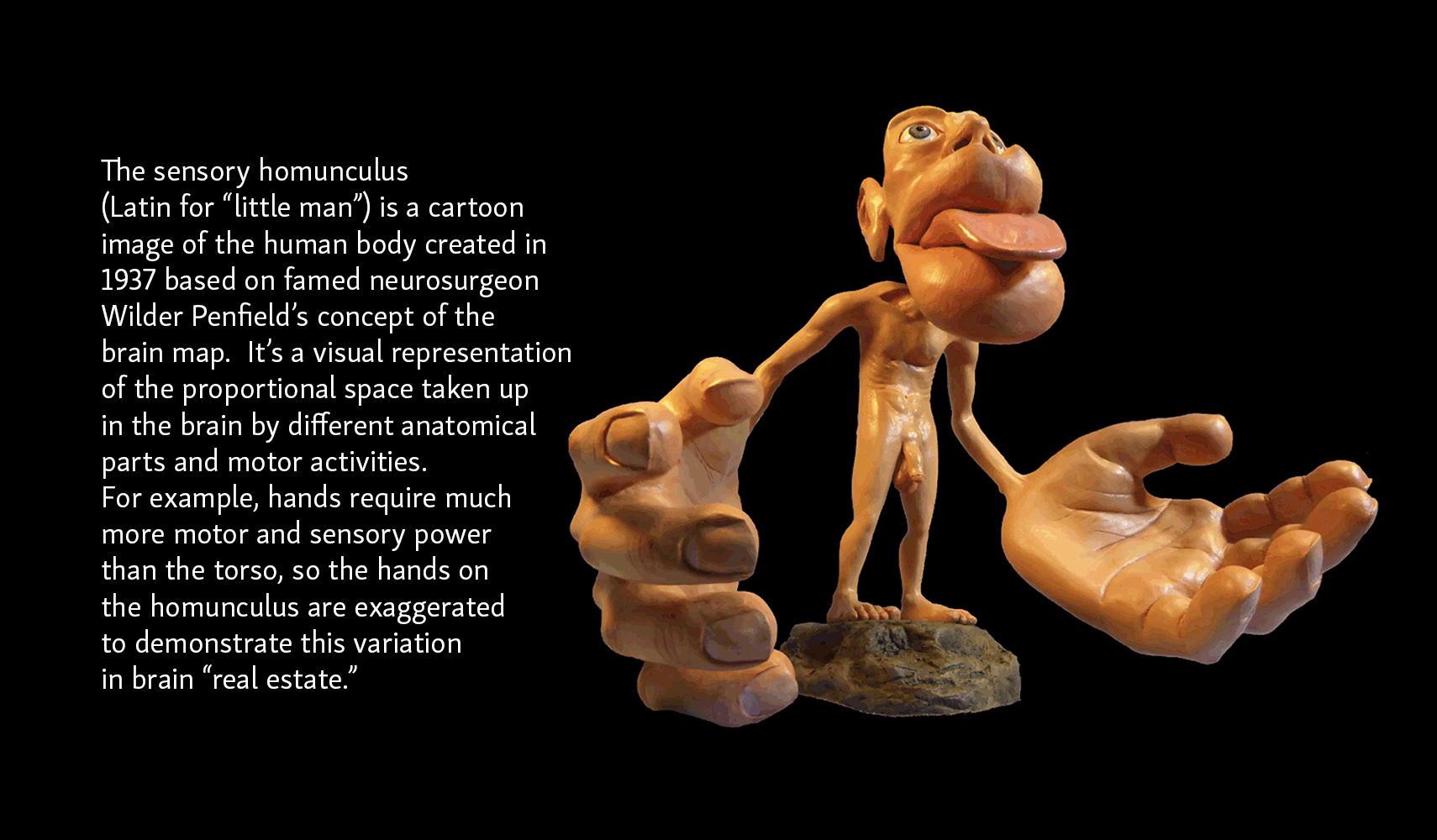
In his ebook The Tell-Tale Brain: A Neuroscientist’s Quest for What Makes Us Human, Dr. Ramachandran connects the phantom limb expertise to the mind map. “Think of what happens when an arm is amputated. There is no longer an arm, but there is still a map of the arm in the brain. The job of the map, its raison d’être, is to represent its arm. The arm may be gone but the brain map, having nothing better to do, soldiers on. It keeps representing the arm, second by second, day after day. This map persistence explains the basic phantom limb phenomenon— why the felt presence of the limb persists long after the flesh-and-blood limb has been severed.”
Victoria C. Anderson-Barnes and her colleagues at Walter Reed Military Medical Middle in Washington, DC hypothesize that this phantom expertise is a results of one thing they name proprioceptive reminiscence, suggesting that “the memories of the limb’s position prior to amputation remains embedded within an individual’s subconscious, and pain memories that may be associated with each limb position contribute not only to phantom limb pain, but to the experience of a fixed or frozen limb.” They suggest that each day duties and bodily exercise change into a part of an individual’s proprioceptive reminiscence financial institution, nonetheless embedded within the unconscious and simply accessible after amputation.
Dr. Ramachandran developed a way to deal with the phantom limb expertise known as Mirror Visible Suggestions (MRV), which he particulars in his ebook. “I placed an upright mirror in the center of a cardboard box whose top and front had been removed. If you stood in front of the mirror, held your hands on either side of the mirror and looked down at them from an angle, you could see the reflection of one hand precisely superimposed on the felt location of your other hand. In other words, you would get the vivid but false impression that you were looking at both of your hands; in fact, you would only be looking at one actual hand and one reflection of a hand.” Dr. Ramachandran instructed sufferers to maneuver their hand, which “tricked” the mind into believing the phantom limb was transferring as effectively, which regularly led to a discount in phantom limb ache, or helped free the sensation of a frozen phantom limb. Although the precise mechanism for what produces the ache reduction or unlocking of the phantom limb is unknown at this level, Ramachandran says in his ebook that he suspects the mind will get so many conflicting sensory inputs that it offers up and says “To hell with it; there is no arm.”
He discusses the mirror field experiment in additional element in his broadly seen 2007 TED Speak, 3 Clues to Understanding Your Brain.
How Does Proprioception Work?
So now we all know what proprioception does, however how does it work? “You have these nerve endings called mechanoreceptors that are peppered throughout your fascial tissues at different depths,” says Jill Miller. “And they transmit information very quickly to your brain about where your parts are in relationship to each other.”
JARGON ALERT
Mechanoreceptors: The nerve endings that relay particular contact and pressure-sensing info to the central nervous system.
“The mechanoreceptors are a system of five different sensory nerves, and they all have different functions,” says David Lesondak. “Some only engage when, let’s say you’re trying to lift a heavy object, and those mechanoreceptors that live near the joint spaces signal your brain about danger so you don’t overdo it. Some of the mechanoreceptors respond to fast, sudden movements and vibration, and some respond to long, slow traction or stretching. Others have a wide range of sensations from itching, to burning, to stinging, to the stroke of a paintbrush or feather, so they are sensations that are physical feelings. They’re not touch, per se, but they’re things we feel physically, and it’s all in the domain of the fascia and connective tissue. And what seems to happen is that when there is pressure or some kind of physical engagement of the mechanoreceptors, there is a very small piezo electric charge that causes the collagen fibers in the fascia to unwind in a particular way that transmits the signal to the brain. It’s a feedback loop that gives us a real-time assessment of how our limbs are working or not working.”
JARGON ALERT
Piezoelectricity: the flexibility of sure natural supplies to provide an electrical cost in response to mechanical stress. Piezo2 is without doubt one of the mechanoreceptors central to proprioception.
Scientists solely lately found a really small variety of individuals worldwide who're lacking this piezo receptor— piezo2—which leaves them with very comparable experiences to Ian Waterman and Oliver Sack’s affected person, Christina, besides the individuals with out the piezo2 receptor are born with this genetic situation, as a substitute of dropping proprioception later in life as a consequence of an an infection or different acute harm. In keeping with an article printed in Vox in 2019, a crew of researchers on the Nationwide Institutes of Well being and their colleagues all over the world have solely recognized 18 instances, with the primary two documented within the New England Journal of Drugs in 2016.
Dr. Wilbour Kelsick is a chiropractor and rehab specialist who works with non-public purchasers and athletes, and has been a member of the official employees of the Canadian Nationwide and Olympic groups for over 25 years. He says the important thing to optimizing proprioception is knowing it as one thing that doesn’t simply dwell within the joints. “It’s a body-wide, integrated mechanosignaling system. That’s the most important thing to understand,” says Dr. Kelsick. “The way we’re taught anatomy and physiology is to look at the body in a very segmented way, but everything is connected. We move as a unit, and the gravitational field is acting on us as a unit. If a golfer is going to hit a ball, his vision is coordinating, but how much force is going to be in the feet? What is the arm going to be doing? The elbow has to talk to the knee, and the knee has to talk to the foot. The communication system has to work as a unit, and that’s what proprioception does.”
A key part of the “knowing where your body is in space” is adjusting to your setting. Jennifer Milner works with a variety of dancers, and seen one thing about the way in which they transfer by means of rooms that broadened her understanding of how proprioception dictates how we work together with our environment. “I noticed when they’re not dancing, they’re hugging the furniture in the room; they’re walking close to a desk or chair,” says Milner. “I commented on that to a doctor friend of mine and he said, ‘Well, that’s proprioception. It’s just the body instinctively looking for something to tell them where they are. You put anybody into a room and they’re going to walk close to the table or close to the chair. Very few people are just going to wander through the open space.’ So it was fascinating to me to think of something bouncing off of myself, like sonar or radar.”
Take a minute and see your individual habits once you stroll by means of a room. Even when the room is huge, do you end up strolling near the wall, or close to objects or furnishings within the room? Do you bump your leg on the espresso desk in the lounge even when there’s loads of house for you in all instructions round it and also you didn’t should be so near the desk within the first place? That’s your physique on the lookout for one thing to inform it the place it's.
Proprioception and Ache
One other sensible cause to grasp the idea of proprioception is its connection to ache. A rise in a single inevitably results in a lower within the different. “Increase of pain is going to result in a loss of proprioception, period,” says Jill Miller. “Even if you don’t think you’re losing coordination, as your pain levels increase, your proprioception decreases. That’s just the way they work.”
Consider the mind map outlined earlier (the sensory homunculus), and the quantity of house every a part of your physique takes up in that map. Ache has a direct affect on it. Adam Wolf summarizes it this fashion: “We know that immediately upon pain, the chemistry in your brain changes, and over time, that results in less representation of that body part in the brain. So that means if you have pain at a joint, either from a sprain or surgery, you’re going to have less proprioception at that body part.”
A part of the explanation the mind chemistry modifications is as a result of ache modifications the way in which we use our physique, so the suggestions loop between the mechanoreceptors and the mind is interrupted. “When we feel pain, we tend to not want to move the area because we don’t want to jar it and make it worse. It’s instinctive,” says David Lesondak. “And, unfortunately, if we do too much of that, it shuts down the proprioception. But if we can slowly induce more proprioception, the pain starts to recede and new opportunities for movement are created.”
A pure consequence of getting proprioceptive sense is that you're higher in a position to keep away from conditions that result in ache or harm. “Proprioception is like a pain gate,” says Dr. Wilbour Kelsick. “If you think about proprioception in terms of maintaining kinesthetic sense, dynamic stability, and control, it prevents the body from getting to the extreme range. Because if the body has no sense of how far it’s going or how much things are being stretched, there is pain right away. Proprioception is like the guard that says ‘I’m here, because if I’m not working, things are going to go crazy and the body will send disinformation into the central nervous system.’”
Issues That Can Negatively Influence Proprioception
- Poor postural habits
- Persistent ache
- Musculoskeletal accidents like sprains, damaged bones, or torn ligaments
- Surgical procedure
- Scoliosis
- Neurological or motion issues like Parkinson’s Illness and A number of Sclerosis
- Situations that can lead to neuropathy (nerve harm), like diabetes, an infection, or vitamin deficiency
- Illnesses of the fascia like Ehlers-Danlos Syndrome
- Growing older
- Hypermobility
Ehlers-Danlos syndrome is an inherited dysfunction that causes hypermobility of the joints due to an abnormality associated to collagen protein. Collagen is a key part of fascia, and if it’s not producing or processing usually, the mechanoreceptors can’t successfully take part within the suggestions loop with the mind to assist wholesome proprioception. Not everybody who's hypermobile has EDS, however many nonetheless expertise hypermobility of their joints and battle with proprioception. “Some with hypermobility don’t always sense when enough is enough,” says David Lesondak. “They might go too far because they’re not getting enough feedback in the mechanoreceptors of the fascia.”
Jill Miller has been hypermobile her complete life, culminating in a complete hip substitute on the age of 45 in 2017. The dramatic surgical procedure upended the whole lot she thought she understood about her personal proprioception. It set her on a course that may convey her again to herself, and assist others who've been in comparable conditions.
Desk Life and Proprioception
Even should you don’t have hypermobility or one other underlying situation that negatively impacts proprioception, trendy work life can have a dramatic affect in your proprioceptive sense. For those who sit all day lengthy at a desk, it’s essential to be proactive about enhancing proprioception so you may cut back the danger of harm.
Dr. Aracelly Latino-Feliz is the founding father of The Movement Therapy Institute in Florida and sees how this impacts her purchasers. “Even if you’re a healthy person, if you’re sitting in a chair for six or seven hours, your body is adapting to being in that position,” says Dr. Latino-Feliz. “Your proprioception will be altered after sitting that long. So you need to understand how it affects your performance so you don’t get injured when you go for a run after work.”
For those who’re residing the desk jockey life, there are some fast issues you are able to do after work to convey your physique again on board, and increase proprioception earlier than you're employed out. First, present some like to the entrance of your hips and thighs, which have been curled up in a seated place all day.
One other essential space to “wake up” is your glutes, which have borne the brunt of your lengthy days in the identical chair, taking part in a single zoom assembly after the opposite.
Take a look at Your Proprioception At Dwelling
Are you interested in your individual proprioceptive talents? There are some straightforward issues you are able to do at residence to gauge proprioception, and this lets you uncover elements of your physique that want extra consideration. While you do a proprioception self-test at residence, you could discover that there are areas that don’t cooperate the way in which you count on them to. Jill Miller calls these physique blind spots. “These blind spots are areas of overuse, underuse, misuse, or body confuse,” says Miller. “And it’s the confusion that I personally find the most intriguing, because it’s a failure of your body to give you feedback about where it is.”
Right here’s a easy steadiness check you may take at residence to gauge proprioception:
How To Enhance Proprioception
Probably the most thrilling information about proprioception is that there are a variety of issues you are able to do by yourself to keep up or enhance it. It gives you a greater sense of how your physique is transferring, cut back ache, and cut back accidents. “When you think about it, we cultivate our senses, don’t we?” says David Lesondak. “People can cultivate a phenomenal palate for wine, or particular types of spices, or certain kinds of auditory or visual acuity. It’s the same thing with proprioception. It’s a sense you can cultivate, and the more you cultivate it, the more exquisite it can be.”
Suggestions To Enhance Proprioception
-
- Transfer. Hike, stroll, run, dance, do yoga, or another bodily exercise that you just get pleasure from.
- Decelerate. If you're making an attempt to appropriate a motion sample that has been altered as a consequence of harm or surgical procedure, gradual it down and take time to actually understand the data coming into your central nervous system.
- Do motion work in entrance of a mirror. This gives you extra visible enter to assist with error correction. Seeing your self out of steadiness helps you make the correct positional change and strengthens the mind/physique connection.
- Do weight bearing workouts.
- Strive fascial bouncing. Soar up and down 50 instances (or stomp your ft when you have arthritis or different ache) to get up your whole connective tissue system.
- Stroll barefoot on uneven surfaces. The seaside, sand containers, or out of doors areas with small pebbles give your ft alternatives to stroll on one thing apart from concrete in stiff sneakers.
- Problem your steadiness. Face the wall and stand on one leg. Maintain a small ball or washcloth in your hand and write the letters of the alphabet on the wall together with your eyes closed.
- Breathe. Use your breath to intensify consciousness of your ribcage, noticing the growth by means of your stomach and the remainder of your physique.
- Contact. Convey consciousness to any a part of your physique by touching it together with your arms, remedy balls, mushy foam rollers, or different props. Dry brushing your pores and skin and tapping additionally heighten sensory inputs.
If you wish to strive a proprioceptive train that places all of those ideas collectively, supplying you with a sensible sense of how your tissues talk together with your mind to maneuver your physique, strive considered one of Jill’s favourite strikes, propellor arms:
Understanding proprioception and doing the small each day or weekly actions to assist it will possibly have a long-lasting affect in your well being and mobility. Growing older is unavoidable, however how we age is as much as us in additional methods than we regularly perceive. You may be your individual well being care supplier right this moment, and reap the advantages for many years to come back. “Prevention starts now,” says Jill Miller. “Slips and falls are the most deadly injuries to people over the age of 80. A fractured hip is the leading cause of death in the elderly, and those fractured hips come from slips and falls. And slips and falls happen because of a lack of proprioception and coordination. You can begin building your confidence and your body competence now.”
David Lesondak believes understanding proprioception permits your physique to change into your finest good friend. “When I work with my patients, I often hear the word want. ‘I want more confidence in my body to do X.’ And they get to the point where they feel like they have a new relationship with their body, and it’s their friend now. And to me, that’s the secret sauce. That’s the real gift you get from proprioception.”
Prepared for extra?
Now that you've got a greater understanding of what proprioception is, right here’s a fast introduction to its sister sense, interoception. If proprioception is knowing what’s taking place to your physique in house exterior, interoception is what’s taking place inside. And simply as you may take issues into your individual arms to enhance proprioception, there are issues you are able to do to assist interoception. Right here’s a have a look at what it's, and how one can improve it.
Learn Extra on Tune Up Health

You can view the original post here Show Original: https://librareview.com/proprioception-past-the-5-senses/


Comments
Post a Comment